

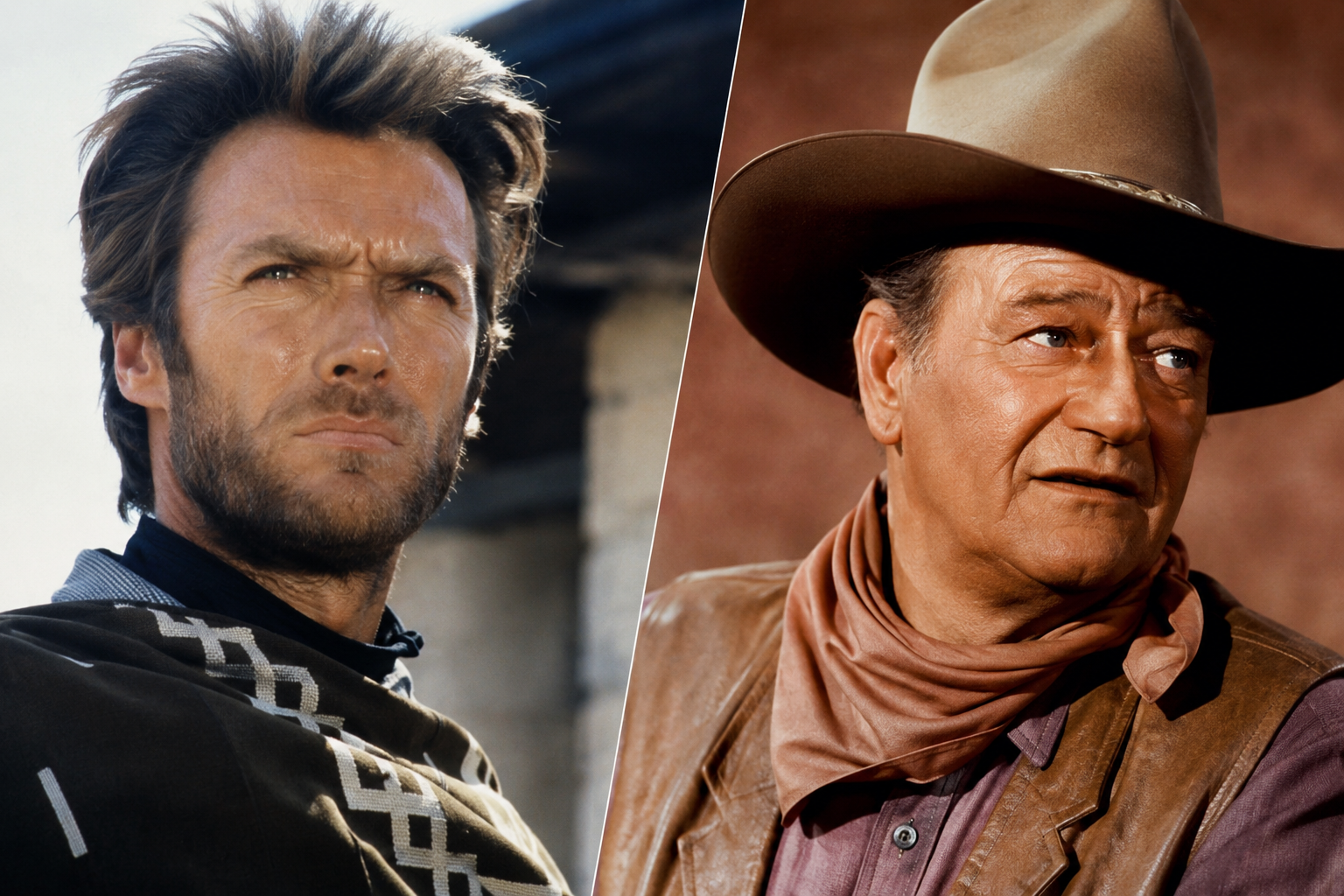
Clint Eastwood and John Wayne may both be legends of the American West, but behind the scenes, the two Hollywood giants were riding in completely different directions.
Wayne was the towering symbol of the old-school Western: brave heroes, clean moral lines and a deep respect for the men who “tamed” the frontier.
Eastwood, meanwhile, helped blow that version of the West apart.
By the time Eastwood starred in and directed High Plains Drifter in 1973, the Western had turned darker, stranger and more brutal. His mysterious gunslinger didn’t ride into town like a shining hero. He arrived in a corrupt mining settlement and unleashed a cold, unsettling brand of justice that looked nothing like the John Wayne movies millions of Americans grew up loving.
And Wayne apparently hated it.
According to Eastwood, the Duke was so bothered by High Plains Drifter that he actually wrote him a letter criticizing the film. Wayne complained that the movie did not represent the people who pioneered the American West.
Eastwood later said he understood why Wayne felt that way.
“I realized that there’s two different generations and he wouldn’t understand what I was doing,” Eastwood said, explaining that High Plains Drifter was meant to be more of an allegory than a traditional Western.
The clash said everything about where Hollywood was headed.
Wayne saw the Western as a place for honor, courage and tradition. Eastwood’s world was murkier. His characters could be violent, selfish, haunted and morally complicated. There were no easy heroes, and sometimes the good guy looked almost as dangerous as the villains.
Film historian Scott Eyman, author of John Wayne: The Life and the Legend, said Wayne was deeply aware that Westerns were changing around him.
Wayne was “sensitive about the drift toward nihilism” and may have even felt “a little threatened,” Eyman said.
There may have been another sting, too.
Years earlier, Wayne had turned down Dirty Harry, the 1971 cop thriller that helped launch Eastwood into a new level of superstardom. Wayne later admitted he had misjudged the role.
“I thought Harry was a rogue cop,” Wayne said. But after seeing the movie, he realized Harry Callahan was the kind of character he had played many times before: a man who stayed inside the law, but bent the rules when he had to save others.
By then, of course, the part belonged to Eastwood.
Despite their shared status as Western royalty, Wayne and Eastwood never made a movie together. They did cross paths, including when Eastwood visited the set of Wayne’s 1976 film The Shootist, but the long-rumored dream pairing never happened.
Eyman said Wayne stayed loyal to what he called “comfort Westerns,” even as audiences began craving something rougher, darker and more cynical.
Some of Wayne’s films still made money. But the old Hollywood West was fading fast.
Eastwood’s rise marked a new era — one where the cowboy hero was no longer spotless, the frontier was no longer romantic, and justice often came with a nasty edge.
In the end, Wayne and Eastwood were not just two movie stars who played cowboys.
They were two different Americas on horseback.
Discover more from Next Gen News
Subscribe to get the latest posts sent to your email.
Neither man takes shit from no one!