

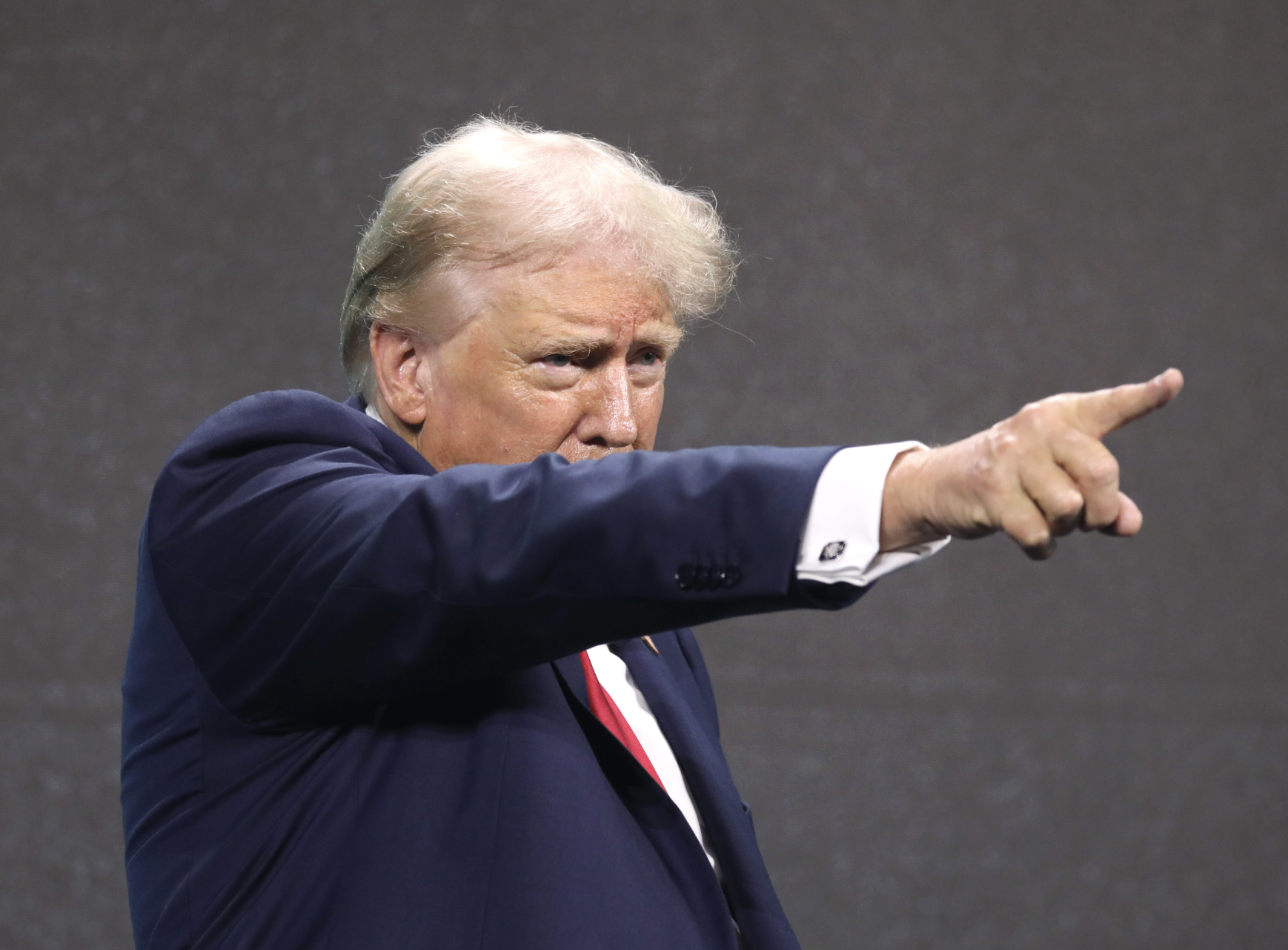
President Donald Trump has declined to appear in person for embattled Republican candidates in two of the nation’s most closely watched gubernatorial races, signaling a strategic retreat just days before the Nov. 4 elections.
Despite endorsing candidates in New Jersey and Virginia, Trump has avoided holding major rallies or events—fueling speculation that he is distancing himself from potential losses that could dent his political capital ahead of the 2026 midterms.
“I don’t think he likes to back candidates he knows are going to lose,” former Virginia GOP state delegate Chris Saxman told The Washington Post.
In New Jersey, Republican gubernatorial candidate Jack Ciattarelli is locked in a tight race against Democrat Rep. Mikie Sherrill. While polling shows the race within single digits, Trump’s involvement has been limited to a short 10-minute tele-rally and a brief written endorsement.
Ciattarelli, a longtime Trump supporter, has repeatedly praised the president.
“I think the president is right about everything he’s doing,” he said at an October town hall.
Still, Trump has made no plans to visit the state or appear publicly with Ciattarelli in the final days of the campaign.
“If Trump showed up in the state on Sunday or Monday, Jack’s turnout Tuesday would be insane,” one anonymous GOP strategist told the Post.
Others argue Trump’s presence could do more harm than good in a blue-leaning state like New Jersey.
“He’s an anchor, not a lifeline,” said Marc Short, former chief of staff to Vice President Mike Pence. “Republicans in these states want to win, and that means some distance from Trump.”
In Virginia, GOP candidate Winsome Earle-Sears is trailing former Rep. Abigail Spanberger (D) by double digits. Despite attending Trump’s recent speech at a U.S. Navy event in Virginia, Earle-Sears was not mentioned by name.
When asked if he endorsed her, Trump simply replied, “I would, yeah.”
Earle-Sears, 61, drew criticism from Trump supporters in 2024 when she said Republicans needed to “move on” from the former president following GOP losses that year.
By contrast, Trump has fully endorsed Virginia Attorney General candidate Jason Miyares, who is leading Democrat Jay Jones. Miyares, 49, received Trump’s “complete and total endorsement,” and has appeared on stage with the president at past events.
Rather than investing time on the ground for candidates, Trump has turned his attention to California’s Proposition 50, a redistricting measure designed to curb partisan gerrymandering. On Oct. 26, he claimed without evidence that the vote was fraudulent.
“Watch how totally dishonest the California Prop Vote is! Millions of Ballots being ‘shipped.’ GET SMART REPUBLICANS, BEFORE IT IS TOO LATE!!!” he posted on Truth Social.
The rhetoric marks a return to Trump’s familiar playbook of preemptively casting doubt on election results, even as he encouraged New Jersey voters to return mail-in ballots—a notable shift from his usual attacks on vote-by-mail systems.
Analysts say Trump’s minimal involvement in tight races is no coincidence.
“Donald Trump doesn’t help people unless it helps him,” said Angela Chen, a senior fellow at the Center for American Progress. “If you look weak in the polls, he’s gone.”
The strategy echoes Trump’s past behavior in 2022 and 2024, when he withheld endorsements from candidates trailing in polls or facing scandal.
“This isn’t leadership,” Chen added. “It’s brand management.”
With election day just three days away, Republican candidates in tight races are left to campaign without the full support of the party’s most powerful figure.
Whether Trump’s absence helps or hurts remains to be seen—but it has exposed deep divisions in the GOP and raised fresh questions about the limits of Trump’s influence in battleground states.
Discover more from Next Gen News
Subscribe to get the latest posts sent to your email.