

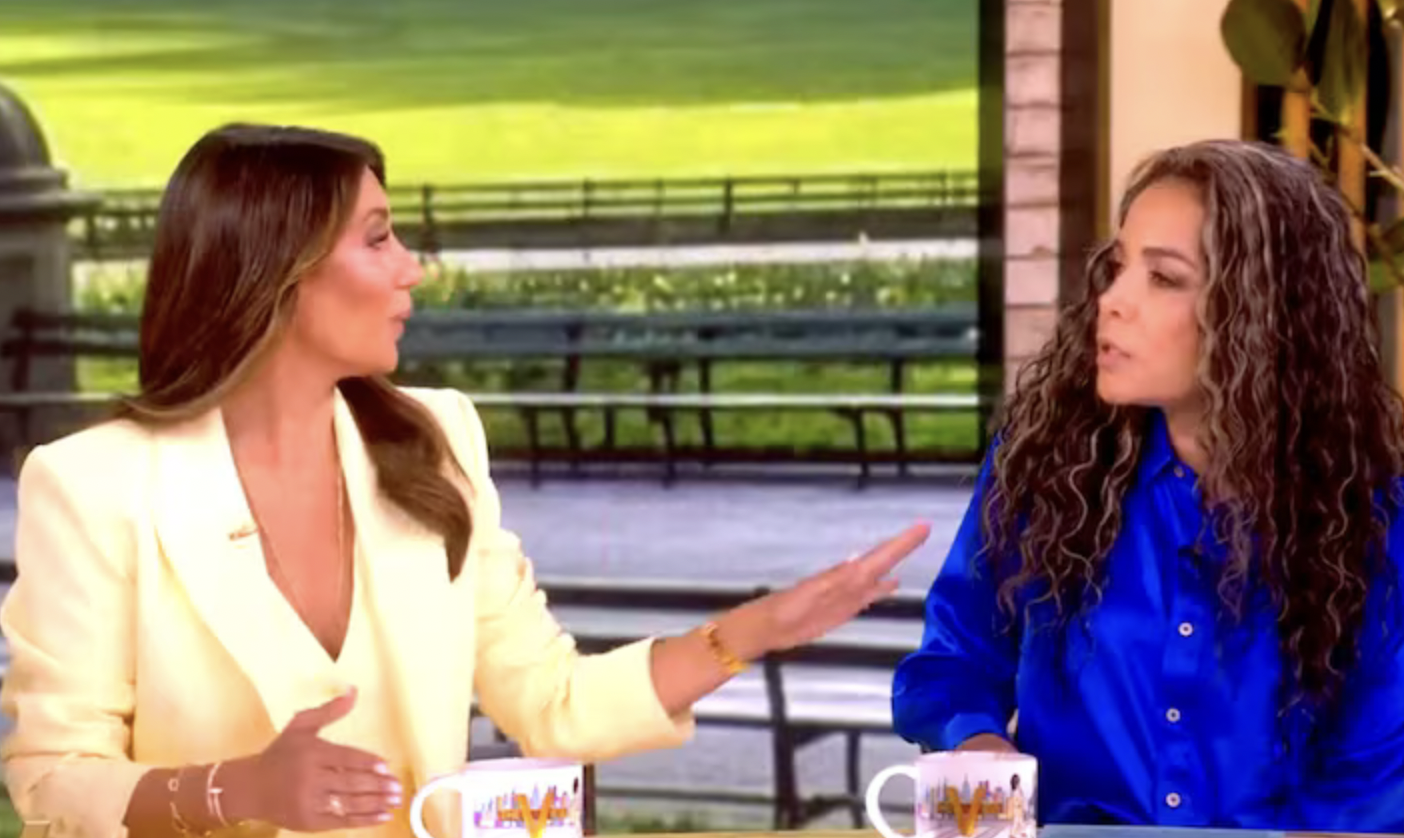
Alina Habba walked straight into a political firestorm on Wednesday when she appeared on The View and found herself under relentless questioning over Donald Trump’s latest legal and political battles.
The tense interview quickly turned into a bruising showdown as co-host Sunny Hostin, a former federal prosecutor, pressed Trump’s former White House counselor on the administration’s controversial decision to go after former FBI Director James Comey. At the center of the clash was a now-deleted Instagram post from Comey showing seashells arranged as “86 47,” which Trump allies have tried to frame as a threat against the president.
Habba didn’t hesitate to back that narrative.
“He is a former FBI director. He knows what 86 47 meant,” Habba said, insisting there was “no question about it.”
But that explanation immediately ran into resistance from the panel. While some critics have claimed the phrase suggested violence against Trump, the term “86” is far more commonly used in everyday settings to mean getting rid of something, throwing something out, or simply being out of stock. Comey had captioned the post, “Cool shell formation on my beach walk,” before later deleting it.
Hostin zeroed in on the gap between Habba’s claim and the more common meaning of the phrase.
“What do you think ‘86’ means?” Hostin asked.
Habba answered, “I think 86 means to kill the president, to get rid of the president,” drawing laughter from the studio audience.
Joy Behar piled on with a cutting joke, asking, “They use it in restaurants. Do they mean to kill the meat? What are they killing?”
Hostin then delivered one of the interview’s sharpest lines, flatly telling Habba, “The dictionary disagrees with you on that.”
Even so, Habba refused to back down, arguing that Comey’s former role in federal law enforcement made the post more serious in her eyes. “This is an FBI director. We have responsibilities,” she said.
But the pressure only intensified when Hostin turned the conversation back on Trump himself. She brought up one of the president’s own inflammatory posts, telling Habba that Trump had also posted “Death to Democrats,” then asked whether he should be held responsible for rhetoric like that. The audience erupted in applause before Habba could even respond.
At first, Habba said she had not seen the post. After being told it did, in fact, exist, she tried to broaden the point.
“Nobody should be inciting violence, period,” she said.
Hostin wasn’t letting her off that easily.
“Including the president?” she asked.
Habba declined to give a direct answer. Instead, she pivoted to defending Trump’s Justice Department, saying, “The Department of Justice brings real cases. We are not Jack Smith. We are not Letitia James. We bring real cases against people.”
That line only fed the larger argument Hostin was making: that Trump’s camp is once again using the machinery of government and the legal system to settle political scores.
Hostin said she believed the Comey matter looked like “a vindictive prosecution” directed by Trump, adding that it fit a broader pattern. She then reminded viewers of Habba’s own legal history, pointing out that she had previously been sanctioned nearly $1 million for filing what a federal judge described as a frivolous lawsuit against Comey, Hillary Clinton, and others — a case the judge blasted as “political grievances masquerading as legal claims.”
That led Hostin to the question hanging over the whole segment: why should anyone believe any of this is about justice instead of revenge?
Habba’s answer did little to cool the temperature. She said she was actually “proud” to have been sanctioned by what she called a “Hillary Clinton-appointed judge” for suing Clinton.
The interview later took another political turn when Behar brought up reports that Habba’s name had been floated as a possible attorney general if Pam Bondi were pushed out. Asked whether she would want the job, Habba kept it short and loyal: “I serve at the pleasure of the president.”
By the end of the segment, the message was hard to miss. What may have started as a routine TV appearance turned into a televised collision over Trump’s revenge politics, selective outrage, and the increasingly thin line between legal accountability and political payback.
Discover more from Next Gen News
Subscribe to get the latest posts sent to your email.
Comey blew making kill Trump/86 47 public… giving simpletons ideas…