

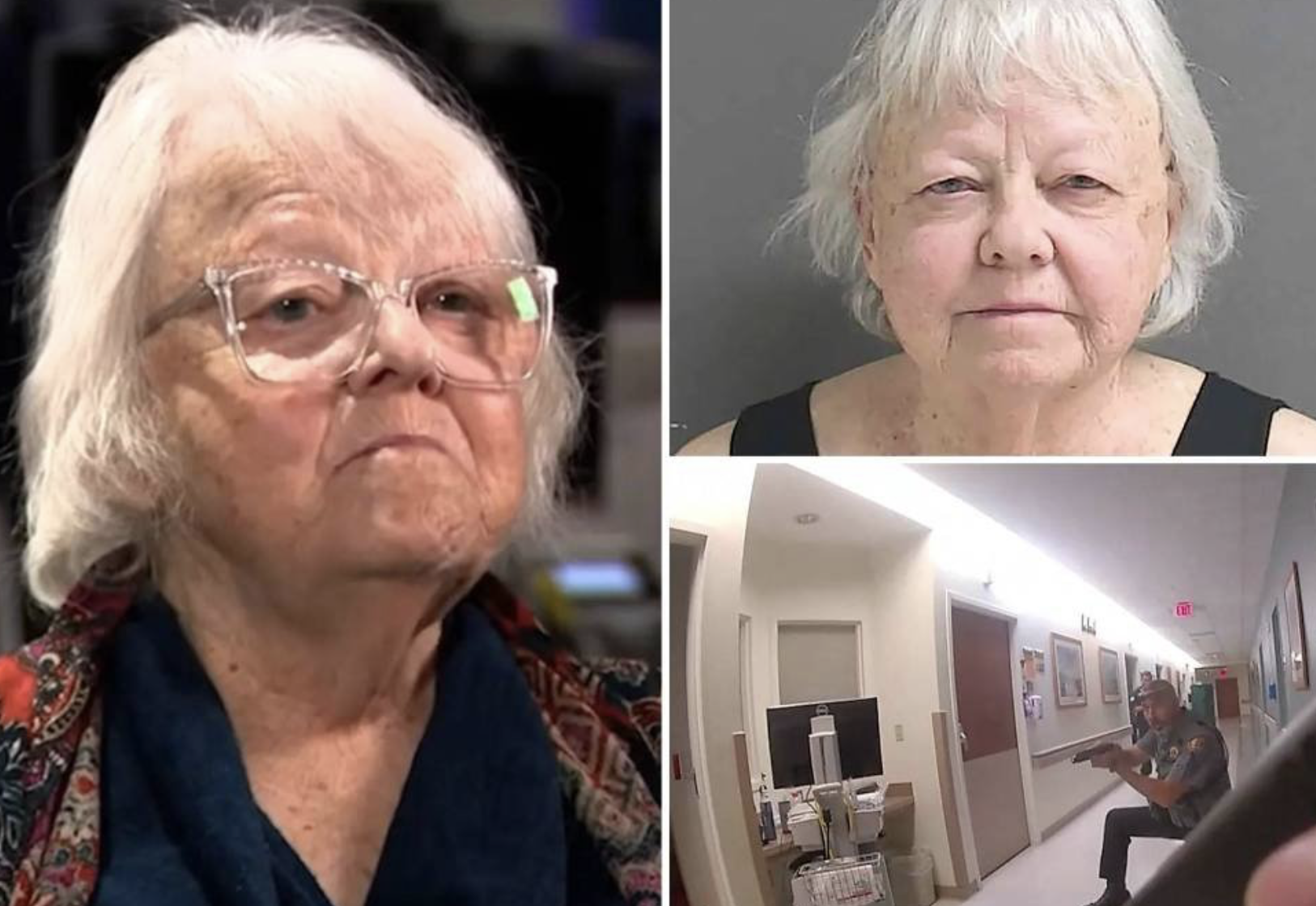
The woman at the center of one of Florida’s most unsettling hospital standoffs is speaking publicly for the first time since her release from prison. And she says she feels no remorse.
Ellen Gilland, now 76, admits she pulled the trigger that ended her husband’s life inside a Daytona Beach hospital room. The shooting happened on Jan. 21, 2023, inside AdventHealth Hospital, where her husband, 77-year-old Jerry Gilland, lay bedridden and fading. Their decades-long marriage ended that morning in a single, desperate act — one police said began as a suicide pact that spun out of control.
Authorities said Jerry had been battling depression and a degenerative form of dementia. His health had unraveled for months. According to investigators, the couple made their pact sometime around New Year’s. The plan was simple and grim: he would end his own life, and she would follow.
But on that morning, Jerry couldn’t lift the gun.
“He tried. He really did,” a retired Daytona investigator told us. “But he wasn’t strong enough. That’s when she stepped in and did it for him.”
Ellen told reporters she only fired because she believed it was the last way left to stop his suffering. “There wasn’t anything else to do,” she said quietly. “He was slipping away. I couldn’t watch him hurt anymore.”
The chaos came seconds later. A nurse heard what sounded like a fall and rushed toward the room. Ellen, panicking, waved the gun and shouted for the staffer to stay back. That split-second reaction triggered a full hospital lockdown. Patients hid. Nurses barricaded doors. Officers swarmed the floor.
Negotiators spent hours convincing Ellen to surrender. “She kept saying she wasn’t trying to hurt anyone else. Only him. Only herself,” one former officer recalled.
Gilland was wheeled out in restraints and charged with manslaughter, aggravated assault with a firearm, and aggravated assault on law enforcement. She later entered a no-contest plea and served nearly two years before her release in November 2025. She is now on 12 years of probation and must complete community service as long as her health allows.
Back home, the weight of her decision hasn’t lifted. But guilt, she said, is not part of it.
“I have to accept the consequences,” Ellen told WESH in a recent interview. “But I don’t regret ending his pain. I loved him too much to let him suffer like that.”
Ellen and Jerry were inseparable since middle school. Friends said they were the kind of couple people envied — the quiet, steady pair who finished each other’s sentences. His illness changed everything. Their life shrank to hospital rooms, medications, and long nights waiting for updates.
“She adored him,” said family friend Marlene Carter. “I don’t agree with what she did, but I understand the love behind it.”
Ellen said the hardest part now is learning how to live alone after nearly six decades of partnership. “I knew how difficult it would be to be without him,” she said. “I’m still trying to figure out how to survive this.”
She avoids dwelling on the shooting, the pact, or the hours-long police standoff. “If I think about it too much, it swallows me,” she admitted.
But one thing hasn’t changed.
Her belief that helping Jerry die was, in her words, “the only mercy left.”
Discover more from Next Gen News
Subscribe to get the latest posts sent to your email.
Know she loved him but she’s not God. Sent from my iPhone