

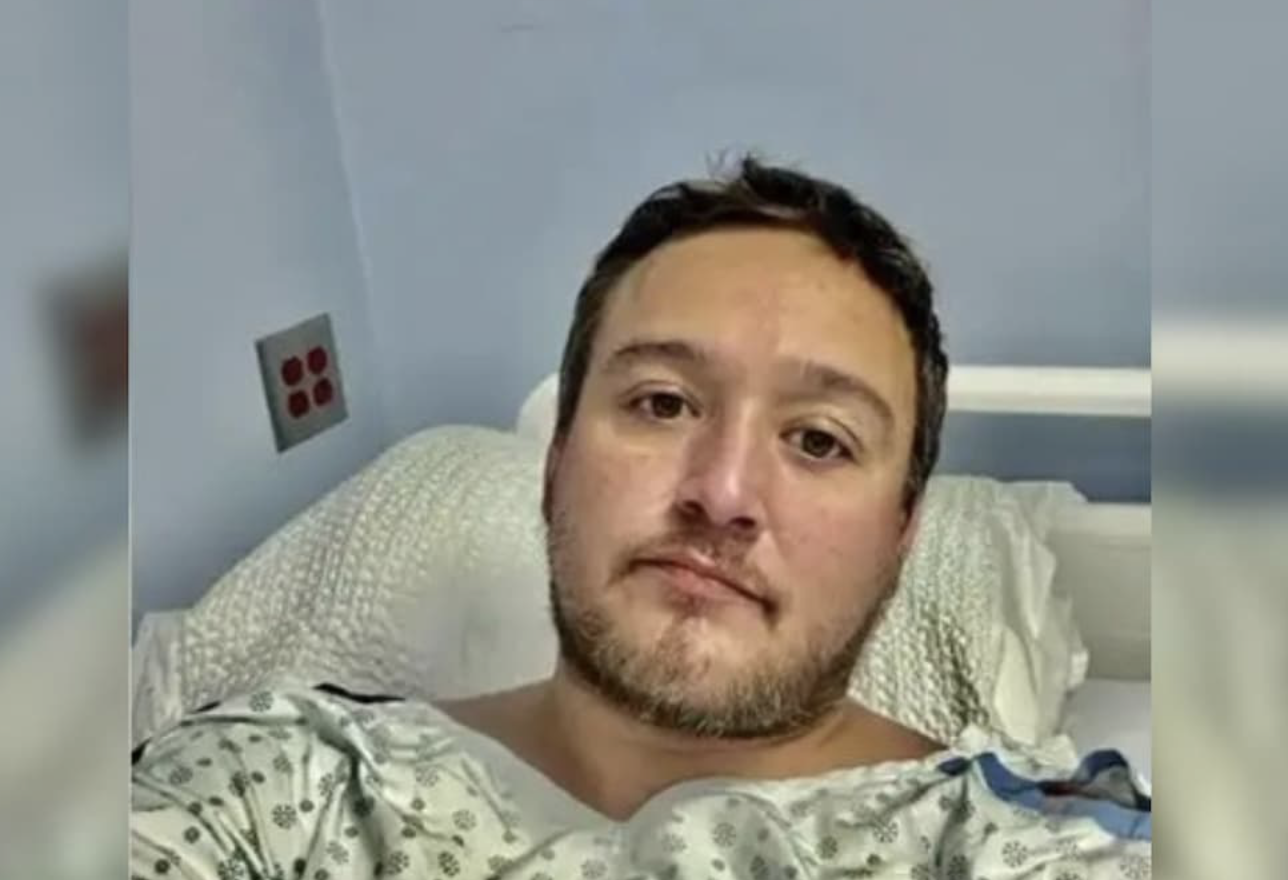
Trevor Dubois, 36, was receiving treatment at Royal University Hospital. On January 9, security officers rushed into his room. Officials later described their reaction as “a report of a gun.” Minutes later, Dubois was unresponsive on the floor. He never woke up.
Authorities quickly announced that security found drugs and an imitation firearm inside the room. But almost immediately, the people who knew Trevor — family, friends, and Indigenous community advocates — said the official account was deeply flawed.
“It wasn’t a gun. It was a pink lighter,” his niece, Jayden Dubois, said. “To say they mistook that for a weapon? It feels like they needed a justification.”
His mother, Val, says the version pushed by police does not line up with the son she raised. “Trevor would never hurt anybody,” she said. “He was sick. He needed care. Instead, he ended up dead. I want someone to tell me how this was allowed to happen.”
Canadian police say security received a report of a firearm inside Dubois’ room and attempted to restrain him. They described what happened as an “altercation,” a word that now sits at the center of the controversy. Within moments, the patient stopped breathing.
Officials also claim methamphetamine, paraphernalia, and a replica gun were recovered. But as pressure mounts on the hospital and law enforcement, family members insist those items were never there — and they believe investigators are trying to protect the hospital from scrutiny.
“Nothing adds up,” Jayden said. “Why would a terminal cancer patient bring a gun into a hospital? Why would he bring drugs? It makes no sense.”
To those who knew him, the portrayal of Dubois as violent or threatening clashes sharply with his real-life work. The 36-year-old was a visible advocate for Indigenous rights, 2SLGBTQ+ youth, and underserved communities in Saskatchewan.
“He lived his whole life helping people who had less than he did,” said longtime friend Jermaine McKenzie. “The Trevor they’re describing is not the Trevor we knew. The response online says everything — people are heartbroken and furious.”
Videos on TikTok and posts across social platforms show growing anger, with many viewers asking whether systemic racism factored into the deadly encounter. Indigenous families in Canada have repeatedly accused both hospitals and police of profiling Native patients, especially men, as aggressive regardless of context.
“One TikTok creator said what many of us are thinking,” McKenzie added. “If Trevor had been white, would security have burst in ready for a fight?”
The case is unfolding at a moment when President Trump’s second term has renewed debates in the U.S. about policing, minority communities, and medical safety — and those conversations are now spilling over the border.
Advocacy groups note that Indigenous Canadians experience higher rates of medical neglect, misdiagnosis, and fatal encounters with law enforcement. Cases like Dubois’ deepen longstanding mistrust.
“This isn’t an isolated incident,” said Dr. Melanie Crowchild, a Cree physician and health equity researcher. “It’s part of a pattern. Indigenous patients are often viewed as threats instead of people in need.”
For now, investigators are offering few updates. Dubois’ relatives say they’re preparing to pursue a formal inquiry, insisting that a vulnerable patient should never have died over a piece of colorful plastic.
“I’m not letting this go,” Val said. “My son walked into that hospital to fight cancer. He didn’t walk out. And someone has to be accountable.”
As outrage spreads, one question echoes across social media, tribal communities, and hospital corridors alike:
How does a man battling a brain tumor end up dead on the floor because security thought a pink cigarette lighter was a gun?
Discover more from Next Gen News
Subscribe to get the latest posts sent to your email.
Horrific Sent from my iPhone
WOKE Canadians and Democrats are really stupid when it comes to guns/handling Guns/identifying guns… never let them have any…